|
Warm Weather is Here - Time to Start Potty Training
We're well through spring and almost into summer. Warmer weather and sunnier days can mean more opportunities to start potty training your little one, even if you think it may be early. Why Start in Spring?
We recommend letting toddlers go pants-free during potty training. Warm spring and summer weather makes that easier, which is why these seasons are a great time to start. Here’s how to plan ahead:
watch our videoSign up to receive our "Ditch the Diapers" Intro to Toddler Potty Training Class, a 37-minute video hosted by Mara Dauber. If you still have questions after watching this video or during the potty training process, email our experts at [email protected].
Why Your Little One May Be More Ready Than You Think Did you know toddlers used to be potty trained around 18 months? Today the average is closer to 37. For most of human history, caregivers responded to their babies’ needs from the start. T his shift isn’t about child development, it’s about marketing. Since disposable diapers became mainstream in the 1960s, the age of potty training has crept later and later. So this idea that kids aren’t ready until age three isn’t backed by biology. It’s a cultural choice. Readiness isn’t about hitting a certain age, it’s about paying attention. In reality, your child is most capable of learning the new skill of potty training between the ages of 18 and 30 months. If you see one or more of the following behavioral signs, your child is indicating that they have the skills necessary for taking on the challenge:
While early potty training can save families over $500 per child and reduce hundreds of gallons of diaper waste, it also builds confidence and independence at a time when toddlers are eager to participate in the world. Cloth Diapers Can HelpIn the United States, most parents start with plastic disposables. But disposable diapers don’t just hold waste, they remove the natural feedback loop. When moisture is pulled away instantly, babies stop connecting the urge to go with the act of going. Over time, that disconnection becomes a habit. What most parents don’t know is that babies who wear cloth diapers often potty train sooner. It’s not a secret or a shortcut. It’s just about feedback, awareness, and support. Cloth doesn’t hide the sensation of being wet, which keeps babies connected to what’s happening in their bodies, and lays the foundation for potty learning later. There’s no magic timeline, but cloth gives children better feedback and often helps them make the transition sooner. Parents who use cloth often notice their toddlers showing interest in the potty earlier. Some even stay dry longer between changes, which is a clear sign of progress. For a version of this information that you can email to others, download our .pdf entitled, Diaper Stork Toddler Potty Training.
Before Toddler Potty Training - Infant Potty Training or Elimination CommunicationIn many parts of the world, caregivers still help babies go without diapers from birth. It’s not extreme or fringe. It’s a practical skill that generations have practiced, and one we can start reclaiming, whether full-time or just a little each day. 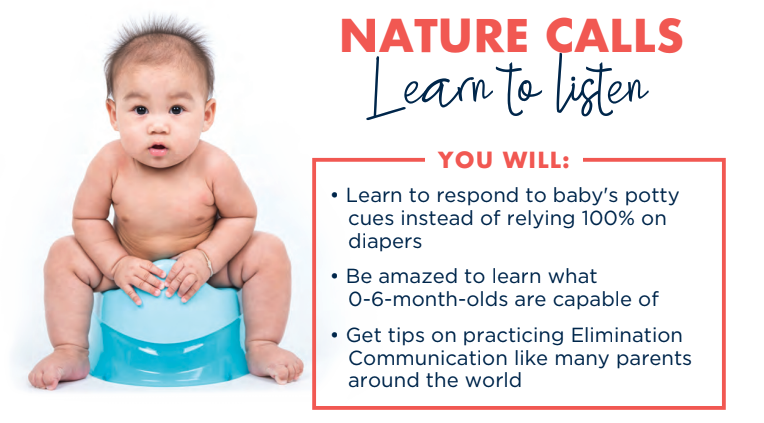
Before we teach toddlers to use a toilet, we unfortunately spend years teaching babies to ignore the signals they were born with. Newborns signal when they need to eliminate, but most parenting advice encourages us to overlook those cues and wait until children are older. Then we expect them to relearn what they once knew. But instead, caregivers can utilize Elimination Communication, which is about paying attention to a baby’s natural rhythms and giving them a chance to go without relying on a diaper. You don’t have to do it all the time. Even catching one pee a day builds awareness, for both of you. Whether your goal is less environmental impact, fewer messy diaper changes, or increasing communication with your baby, elimination communication (EC) is a wonderful tool. There are no rules about how you do it, and any amount will help your baby stay in tune with their natural ability to control the release of their muscles for elimination. Visit our infant potty training page to learn more and watch a helpful video from doula and mom Suzanne DeSelms. |